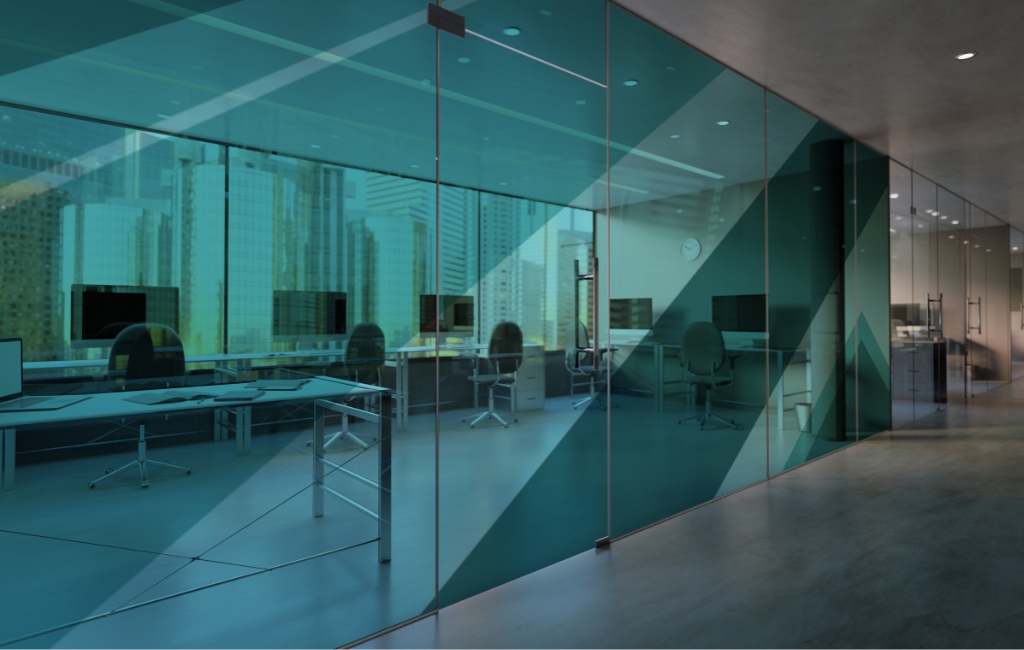
Glass partition walls solve a problem that drywall creates. In a San Diego home or office where natural light is part of what the space is worth, a solid wall stops that light at the point of installation. Glass lets it continue moving through the floor plan, defines the space without closing it off, and keeps the room on the other side from reading as a box.
Shower Door Masters has completed custom glass installations across San Diego and Orange County for more than 25 years, with every job performed by employed technicians following the same field measurement, fabrication, and installation standards. All work is backed by a warranty covering both materials and workmanship. Schedule your consultation before any glass is fabricated or hardware is committed to.
Why Glass Over Drywall
The practical difference between a glass partition and a solid wall starts with light. A Cornell University study found that workplaces with access to natural light showed a 56% reduction in drowsiness and 63% fewer headaches among workers. For a home office carved out of a San Diego property, or a commercial space where layout and light are doing the work that square footage cannot, that difference is not decorative.
53% of San Diego businesses projected remote work options in 2024, and the demand for dedicated home office space has followed that shift. A glass partition creates the visual and acoustic separation a working space needs without reducing the room it borrows from to a dark interior.
Beyond light, glass partitions offer a practical maintenance advantage over drywall. The surface requires only standard glass cleaner to maintain, there are no paint schedules, and damage to a single panel does not require patching, priming, and repainting an entire wall section.
Fixed vs. Sliding: Choosing the Right Configuration
The two primary glass partition configurations serve different needs, and the right choice depends on how the space has to function day to day.
Fixed glass partitions are permanent installations suited to spaces where the division between areas is consistent. Floor-to-ceiling frameless panels work well in home offices where the goal is a defined workspace that stays visually connected to the surrounding area. Framed versions add structural support along key edges and suit spaces where wall conditions or opening dimensions make a fully frameless mount more complex.
Sliding glass partition systems operate on precision-engineered tracks and allow a space to open or divide as needed. In a commercial setting, that means a conference room or private office that can be created and released without permanent construction. In a residential setting, it means a home office, dining room, or living area that can function differently depending on what the day requires.
The choice between fixed and sliding also affects the installation scope. A fixed system requires fewer hardware components and a simpler mounting process. A sliding system requires precise track alignment across the full span of the opening, which makes the field assessment more involved but not more complicated for an experienced technician.
Glass Type and Hardware Finish
Clear tempered glass is the standard choice and preserves full light transmission through the partition. Frosted and etched treatments introduce privacy without sacrificing light, suited to home offices with sightlines from common areas, HR spaces, and executive offices where visual separation is a practical requirement. Tinted glass reduces afternoon glare in west-facing San Diego spaces where sun exposure affects how the room functions for most of the day.
Hardware finish connects the system to the existing character of the space. Matte black suits contemporary San Diego interiors and holds its appearance well over time. Brushed nickel works where existing fixtures already carry that finish. Brushed gold fits warmer-toned rooms but requires consistency with every other metal finish present to avoid a disconnected result.
Both decisions need to be made at the consultation, before any glass is fabricated. Glass cannot be modified once it is cut and tempered, and hardware substitutions after installation are visible in ways that are difficult to correct without starting over.
What Installation Actually Involves
Glass partition installation requires the same field discipline as any custom glass system. Walls are checked for plumb, floor conditions are assessed, and anchor point capacity is confirmed before fabrication begins. In older San Diego construction, none of those conditions can be assumed.
Glass fabricated to the wrong measurements cannot be corrected after tempering. A field assessment before fabrication is where errors that would cost a full replacement are caught before the glass is ever ordered. Hardware is torqued to specification, the completed system is tested before the technician signs off, and every installation is documented for warranty coverage.
For sliding systems, track alignment is verified across the full span before the panels are hung. A track that is off level by a small margin at installation becomes a door that binds or drags within the first year of use.
Why San Diego Calls Shower Door Masters
Shower Door Masters brings over 25 years of Southern California experience, in-house glass fabrication, and more than 35 employed technicians trained to the same measurement and installation standards on every job. Every technician is a direct employee, not a subcontractor, and every installation is covered by a warranty on both materials and workmanship.
For San Diego homeowners and businesses investing in a glass partition system, the field visit is where the work actually starts. A consultation before fabrication is what separates an installation that fits and holds from one that requires corrections after the glass has already been cut. Visit our website to schedule your consultation before any glass is fabricated.
Frequently Asked Questions
What are glass partition walls used for in San Diego homes and offices?
Glass partition walls define interior spaces while preserving natural light and visual openness. In residential settings they are commonly used for home office enclosures and flexible room dividers. In commercial spaces they create conference rooms, private offices, and defined work zones within open-plan layouts without requiring permanent construction.
What is the difference between fixed and sliding glass partition systems?
Fixed glass partitions are permanent installations that create a consistent division between spaces. Sliding systems operate on precision tracks and allow the space to open or close depending on need, making them better suited to environments where layout flexibility is a practical requirement rather than a preference.
What glass types are available for partition walls?
Clear tempered glass is standard and provides full light transmission. Frosted and etched treatments preserve light while adding visual privacy, common in home offices and commercial spaces where confidentiality matters. Laminated glass is used where acoustic performance is a priority. The right choice is confirmed at the field assessment based on the specific application.
How long does glass partition installation take?
Most installations are completed in a single day once glass fabrication is finished. The full timeline from initial consultation to completed installation typically runs one to two weeks, accounting for field measurement, custom fabrication, and scheduling.
Do glass partition walls provide any sound insulation?
Standard single-pane tempered glass provides moderate acoustic separation, sufficient for reducing ambient noise between spaces. For applications requiring stronger sound control, such as conference rooms or private offices in open-plan commercial spaces, laminated or double-glazed glass panels are specified at the time of consultation based on the acoustic requirements of the specific space.