Los Angeles does not have one kind of bathroom. A Silver Lake Craftsman bungalow, a midcentury modern in the Hills, a Spanish Revival in Los Feliz, and a new construction in West Hollywood each present a different layout, different wall conditions, and a different visual standard. The right shower door installation in Los Angeles starts with understanding what space it is going into, not fitting a standard product to an opening and calling it done.
That gap between the right installation and a generic one is where most problems begin. A door that doesn’t account for wall plumb leaks. Hardware that doesn’t match the home’s finishes reads as an afterthought. Glass fabricated to a stock dimension rather than the actual measurements of the opening will show it over time.
Shower Door Masters has completed shower door installations across Los Angeles and Orange County for more than 25 years, with every job performed by employed technicians following the same measurement, fabrication, and calibration standards on every installation. All work is backed by a warranty covering both materials and workmanship. Schedule your consultation before any glass is fabricated or hardware is committed to.
What Los Angeles Homes Actually Present
Los Angeles has one of the oldest housing stocks in California. The median construction year across the city is 1964, with nearly 30% of homes built before 1950. In neighborhoods like Los Feliz, Silver Lake, and Mid-City, it is common to find bathrooms that have been remodeled multiple times over decades — each renovation layering new tile over old substrate, shifting wall plumb, and leaving conditions that no standard spec can account for.
At a city-wide median home price of $1 million, the expectations for a finished bathroom have risen faster than many of these homes were originally built to support. A professionally fitted custom enclosure is what bridges that gap: glass fabricated to the measured conditions of the specific opening, hardware selected to match the home’s existing finishes, and an installation that accounts for what is actually behind the tile before a single anchor point is set.
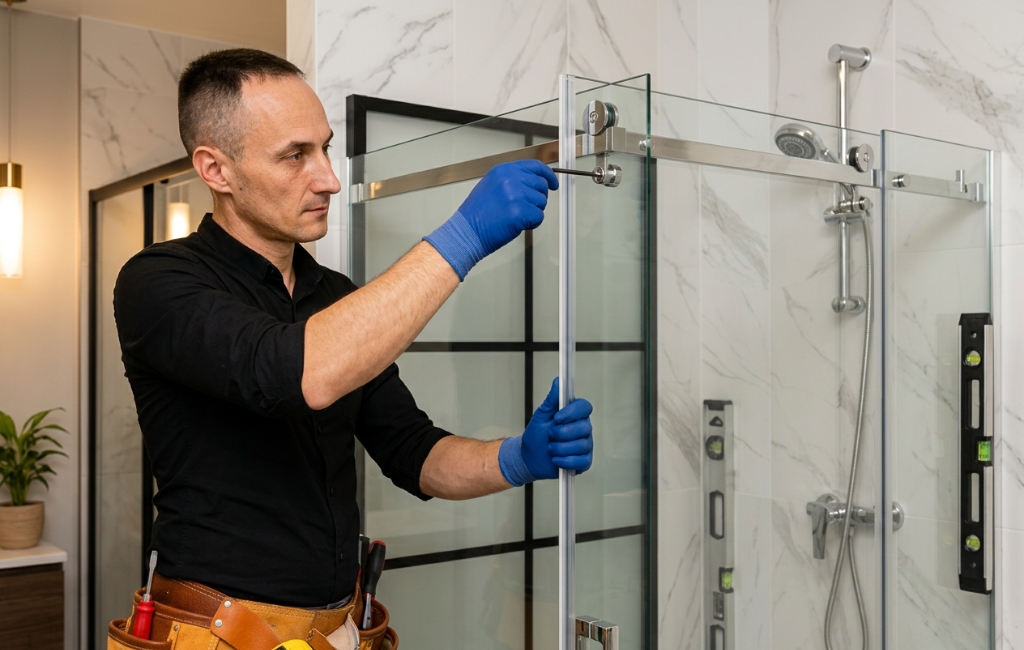
Every Shower Door Masters installation begins with a professional field visit where walls are checked for plumb, floor slope is assessed, and substrate conditions are confirmed before fabrication begins.
Matching the Enclosure to the Space
Los Angeles bathrooms call for different configurations depending on the layout and the architecture of the home. Shower Door Masters installs the full range of system types, and the field visit determines which one fits the specific space.
Frameless enclosures suit the clean, open aesthetic common in midcentury and contemporary LA homes. Thick tempered glass with minimal hardware lets tilework and stone take center stage without a surrounding frame interrupting the visual. They require precise field measurement and a substrate capable of carrying the load at each individual anchor point.
Semi-frameless systems add structural support along key edges and work well in older homes where wall conditions or opening dimensions make fully frameless mounting more complex. They maintain a modern appearance while tolerating the kinds of irregularities that decades-old plaster walls commonly present.
Sliding door configurations suit the compact bathrooms found throughout apartment buildings, older Westside homes, and any space where swing clearance is limited by fixture placement or alcove depth. They deliver the glass aesthetic without requiring the floor space a hinged system needs.
Hardware finish connects the enclosure to the rest of the bathroom. In a Spanish Revival with warm bronze plumbing fixtures, brushed gold reads intentional. In a midcentury bathroom with chrome hardware throughout, polished chrome or brushed nickel keeps the room cohesive. Selecting finish at the time of consultation, not as an afterthought, is what makes an installation look considered rather than assembled.
What a Professional Installation Involves
The work that separates a lasting installation from one that starts failing within the first year happens before the glass arrives.
Wall plumb is checked at the top, middle, and bottom of the opening. Floor slope is assessed for its effect on threshold placement and door sealing. Tile thickness and substrate condition are confirmed before anchor points are set. In a pre-1960s Los Angeles home, none of these can be assumed. Walls have shifted, substrates vary widely, and stud placement in older construction rarely aligns with where modern hardware wants to sit.
California requires tempered safety glass in all shower enclosures. Once glass is cut and tempered, it cannot be modified. An error in measurement means new glass at full cost and a full fabrication lead time, which is why the field visit is not optional.
Hardware calibration closes the process. Hinges and pivot systems are set to manufacturer torque specifications, the completed enclosure is tested before the technician signs off, and every installation is documented for warranty coverage. The full timeline from consultation to completed installation typically runs one to two weeks, accounting for measurement, custom fabrication, and scheduling.
Why Los Angeles Calls Shower Door Masters
A city with this much architectural variety needs an installer who can read the specific conditions of each space and fabricate accordingly. Shower Door Masters brings over 25 years of Southern California experience, in-house fabrication, and more than 35 employed technicians trained to the same standards on every installation.
Every technician is a direct employee, not a subcontractor, and every installation is covered by a warranty on both materials and workmanship. For Los Angeles homeowners navigating older construction and diverse architectural styles, that consistency matters.
Call Shower Door Masters at (949) 966-0601 or visit our website to schedule your consultation and get a professional assessment of your specific space before any glass is fabricated.
Frequently Asked Questions
What should I look for in a shower door installation company in Los Angeles?
Look for companies that conduct a field measurement before fabricating any glass, employ their own installation technicians rather than subcontracting, and back their work with warranties covering both materials and labor. In Los Angeles specifically, ask how they handle pre-1960s substrates, shifted walls, and the variety of tile conditions common in homes that have been remodeled multiple times.
How long does shower door installation take in Los Angeles?
Most residential installations are completed in a single day once glass fabrication is finished. The full timeline from initial consultation to completed installation typically runs one to two weeks, accounting for professional measurement, custom fabrication, and scheduling.
What shower door configuration works best for a compact Los Angeles bathroom?
Sliding door systems are the most practical choice for compact alcoves where door swing clearance is limited by fixture placement or tight dimensions. They deliver the glass aesthetic without requiring the floor space a hinged frameless system needs. A field visit confirms which configuration the specific space can support before any glass is ordered.
Does hard water in Los Angeles affect shower door hardware and glass over time?
Los Angeles draws from multiple water sources, many carrying elevated mineral content that leaves deposits on glass and hardware over time. On untreated glass, those deposits can etch permanently. Professional installers specify seals rated for hard water environments and can apply hydrophobic coatings to the glass that reduce mineral buildup from the first use.
Can a custom shower door be installed in a pre-1950s Los Angeles home?
Custom shower door installation in pre-1950s Los Angeles homes is routine for experienced installers, but it requires a thorough field assessment before fabrication. Wall plumb, substrate type, floor slope, and anchor point capacity all need to be evaluated before glass is sized or ordered. These conditions vary significantly in older construction and cannot be determined without a site visit.
Getting it right means fabricating to the exact measurements of the specific space, not adapting a standard size to approximate them. Walls go out of plumb. Tile surrounds vary in thickness. Floor slopes affect how a threshold sits and how a door seals. None of that shows in a well-executed installation, and all of it shows in a rushed one.
Shower Door Masters has completed custom glass shower door installations across Orange County for more than 25 years, with every installation performed by employed technicians following the same measurement, fabrication, and calibration standards on every job. All work is backed by a warranty covering both materials and workmanship. Schedule your consultation before any glass is fabricated or hardware is ordered.
What Costa Mesa Bathrooms Are Being Upgraded From
Costa Mesa’s mid-century housing stock was built around tub-and-curtain configurations. With a median construction year of 1971 and home values now sitting at a median of $1.6 million, the gap between what these homes are worth and what their interiors look like is driving a wave of renovation. The bathroom is usually first.
The most common starting point is a tub-to-shower conversion in a bathroom where the original layout never made sense for how the space is actually used. The tub comes out, the alcove is retiled, and then the question becomes what encloses it. That decision determines whether the renovation reads as finished or as a work in progress.
A custom glass enclosure fabricated to the actual measurements of the retiled opening is what closes that gap. Shower Door Masters begins every installation with a professional field visit. Walls are measured for plumb at multiple points, floor slope is assessed, and substrate conditions behind the tile are identified before any glass is sized or ordered. Nothing is fabricated until that assessment is complete.
Glass and Hardware: Getting the Details Right
Glass type and hardware finish are the two decisions that most affect how a finished bathroom reads, and both are worth thinking through before fabrication begins.
Standard clear tempered glass is the right call in most Costa Mesa bathrooms. It performs well across a wide range of tile colors and finishes, costs less than specialty glass, and delivers the open, clean look most homeowners are after. For bathrooms built around white tile, marble, or light stone, low-iron glass removes the faint green tint present in standard panels, producing a colorless panel that keeps light-toned materials looking exactly as they were selected.
Frosted and acid-etched glass suit shared bathrooms or configurations where the shower shares sightlines with the rest of the room. They allow light through while obscuring visibility, and they hide water spots and mineral buildup better than clear glass in daily use.
Hardware finish ties the enclosure to the plumbing fixtures already in the room. Brushed nickel, matte black, and brushed gold each read differently against tile and stone. Selecting a finish that matches the existing fixtures keeps the enclosure from standing out as a separate decision rather than part of a considered design.
What a Precision Installation Involves
The work that separates a lasting installation from one that starts failing within the first year happens before the glass arrives.
Wall plumb is checked at the top, middle, and bottom of the opening. Floor slope is assessed for its effect on threshold placement and how the door seals. Tile thickness and substrate condition are confirmed before anchor points are set. In a mid-century Costa Mesa home, none of these can be assumed. Walls have shifted, tile surrounds vary in thickness, and stud placement rarely aligns with where modern hardware wants to sit.
California requires tempered safety glass in all shower enclosures. Once glass is cut and tempered, it cannot be modified. An error in measurement or an unidentified substrate condition means new glass at full cost and a full fabrication lead time. Getting the field assessment right the first time is what prevents that.
Hardware calibration closes the process. Hinges and pivot systems are set to manufacturer torque specifications, the completed enclosure is tested before the technician signs off, and every installation is documented for warranty coverage. The full timeline from consultation to completed installation typically runs one to two weeks, accounting for measurement, custom fabrication, and scheduling.
Why Costa Mesa Calls Shower Door Masters
Costa Mesa bathroom upgrades deserve an installer who understands the specific conditions that mid-century construction presents and fabricates glass to the actual measurements of the space. Shower Door Masters brings over 25 years of Orange County experience, in-house fabrication, and more than 35 employed technicians trained to the same standards on every installation.
Every technician is a direct employee, not a subcontractor, and every installation is covered by a warranty on both materials and workmanship. For Costa Mesa homeowners investing in a bathroom renovation, that standard makes sure the enclosure holds up as well as the tilework surrounding it.
Costa Mesa renovations deserve an enclosure that finishes the job properly. Call Shower Door Masters at (949) 966-0601 or visit our website to schedule your consultation before any glass is fabricated.
Frequently Asked Questions
What should I look for in custom glass shower door installers near me in Costa Mesa?
Look for companies that conduct a field measurement visit before fabricating any glass, employ their own installation technicians rather than subcontracting, and back their work with warranties covering both materials and labor. In Costa Mesa specifically, ask how they handle older substrates, shifted walls, and tile surrounds installed in previous remodels — conditions that are common across the city’s mid-century housing stock.
How long does a custom glass shower door installation take in Costa Mesa?
Most residential installations are completed in a single day once glass fabrication is finished. The full timeline from initial consultation to completed installation typically runs one to two weeks, accounting for professional measurement, custom fabrication, and scheduling.
What is the difference between frameless and semi-frameless shower enclosures?
Frameless enclosures use thick tempered glass panels with no surrounding metal frame, delivering the cleanest open look and the most demanding installation requirements. Semi-frameless systems add structural support along key edges, making them better suited to bathrooms where wall conditions or opening dimensions make fully frameless mounting more complex. A field assessment determines which configuration the specific space can support.
Does hard water in Orange County affect a custom glass shower door over time?
Orange County’s water carries elevated calcium and magnesium levels that leave mineral deposits on glass and hardware surfaces over time. On untreated glass, those deposits can etch into the surface permanently. Professional installers familiar with Orange County conditions specify seals rated for hard water environments and can apply hydrophobic coatings to the glass that reduce mineral buildup from the first use.
Can a custom glass shower door be installed during a bathroom renovation in progress?
Yes, and it is the recommended approach. Custom fabrication requires field measurements taken after tile installation is complete, since tile thickness and substrate conditions affect how the glass is sized. Scheduling the field visit at the end of the tile phase and ordering glass at that point keeps the renovation timeline moving without requiring the enclosure to be approximated to a rough opening.
The master bathrooms of Newport Beach homes tend toward natural stone, large-format tile, and clean sightlines. A shower enclosure that sits slightly out of plumb, carries hardware in the wrong finish, or does not seal correctly against expensive tilework undermines the entire space. Getting it right means starting from the actual conditions of the room, not from a standard dimension that approximates them.
Shower Door Masters has completed custom glass shower door installations across Orange County for more than 25 years, with every installation performed by employed technicians following the same measurement, fabrication, and calibration standards on every job. All work is backed by a warranty covering both materials and workmanship. Schedule your consultation before any glass is fabricated or hardware is ordered.
What Newport Beach Bathrooms Actually Look Like
Newport Beach carries a median home sale price of $3.5 million, and the bathrooms in homes at that price point are expected to reflect it. A dated enclosure or a prefabricated door adapted to fit reads against everything else in a room built around premium stone and custom tilework. The shower is too central to the space to treat as an afterthought.
The challenge is that most Newport Beach homes were not built with that standard in mind. Newport Beach’s median construction year is 1977, meaning the majority of bathrooms in the city were designed around tub-and-curtain configurations with compact alcoves, walls that have shifted over decades, and substrates that were never engineered for the load requirements of a modern glass enclosure.
A custom installation bridges that gap. Getting it right means starting with a field assessment of the specific space before any glass is fabricated or hardware is ordered. Every Shower Door Masters installation begins with exactly that.
Glass and Hardware: Decisions That Define the Finished Room
The glass type matters in a Newport Beach bathroom in a way it may not elsewhere. Standard clear tempered glass carries a faint green tint from its iron oxide content, which becomes more pronounced on thicker panels and along exposed edges. In a bathroom with white marble, pale stone, or light-colored tile, that tint puts a greenish cast across the materials you paid to showcase.
Low-iron glass eliminates that tint entirely, producing a colorless panel that transmits the full brightness and true color of the surfaces behind it. Low-iron glass delivers approximately 6% more light transmittance than standard clear and keeps lighter-toned materials such as white marble, pale stone, and cream tile looking exactly as they were selected. For darker tile or industrial palettes, standard clear performs well and costs less.
Frosted and acid-etched glass work in guest bathrooms or shared configurations where some visual privacy is desirable without sacrificing the light and openness of a glass enclosure. The choice does not have to be all-or-nothing — mixed configurations using clear panels in some positions and frosted in others are common in bathrooms where sightlines vary by position.
Hardware finish is the detail that ties the enclosure to the rest of the room. Brushed nickel, matte black, and brushed gold each read differently against tile, stone, and vanity hardware. Selecting a finish that matches the plumbing fixtures already in the space keeps the enclosure from reading as an addition rather than part of an intentional design.
What a Precision Installation Involves
The work that determines long-term performance happens before the glass arrives on site.
Wall plumb is checked at the top, middle, and bottom of the opening. Floor slope is assessed for its effect on threshold placement and how the door seals. Tile thickness and substrate condition are identified before any anchor points are set. A frameless door that is slightly out of plumb will leak at the seal. Hardware anchored into the wrong substrate will shift over time. Glass fabricated without accounting for wall variation will not sit flush against the tile.
California requires tempered safety glass in all shower enclosures. Once that glass is cut and tempered, it cannot be modified. An error in measurement or an unidentified condition behind the tile means new glass at full cost and a full fabrication lead time.
Hardware calibration closes the process. Hinges and pivot systems are set to manufacturer torque specifications. The completed enclosure is tested operationally before the technician signs off, and every installation is documented for warranty coverage. The full timeline from consultation to completed installation typically runs one to two weeks, accounting for field measurement, custom fabrication, and scheduling.
Why Newport Beach Calls Shower Door Masters
A custom shower enclosure in a Newport Beach master bathroom deserves an installer who understands what that bathroom is and what it costs to build. Shower Door Masters brings over 25 years of Orange County experience, in-house fabrication, and more than 35 employed technicians trained to the same standards on every installation.
Every technician is a direct employee, not a subcontractor, and every installation is covered by a warranty on both materials and workmanship. For Newport Beach homeowners who have invested in premium stone and custom tilework, that standard of execution protects what those finishes represent.
Call Shower Door Masters at (949) 966-0601 or visit our website to schedule your consultation before any glass is fabricated or hardware is committed to.
Frequently Asked Questions
What should I look for in custom glass shower door installers near me in Newport Beach?
Look for companies that conduct a professional field measurement before fabricating any glass, employ their own installation technicians rather than subcontracting, and back their work with warranties covering both materials and labor. In Newport Beach specifically, ask whether they carry low-iron glass options and whether they understand the substrate and coastal hardware requirements specific to Orange County homes.
How long does a custom glass shower door installation take in Newport Beach?
Most residential installations are completed in a single day once glass fabrication is finished. The full timeline from initial consultation to completed installation typically runs one to two weeks, accounting for professional measurement, custom fabrication, and scheduling.
What is the difference between standard glass and low-iron glass for a shower enclosure?
Standard clear tempered glass contains iron oxide, which gives it a faint green tint that becomes more visible on thicker panels and along exposed edges. Low-iron glass reduces that iron content to produce a colorless panel with approximately 6% more light transmittance than standard clear. In a Newport Beach bathroom with white marble or light-colored tile, the difference in how those materials read through the glass is noticeable.
Does hard water in Orange County affect a custom glass shower door over time?
Orange County’s water carries elevated calcium and magnesium levels that leave mineral deposits on glass and hardware over time. On untreated glass, those deposits can etch into the surface permanently. Professional installers familiar with Orange County conditions specify seals rated for hard water environments and can apply hydrophobic coatings to the glass that reduce mineral buildup from the first use.
Can a frameless shower enclosure be installed in any Newport Beach bathroom configuration?
Frameless enclosures suit most Newport Beach bathroom configurations, but they require a thorough field assessment before fabrication. Wall plumb, tile substrate condition, floor slope, and the structural capacity at each anchor point all need to be evaluated before any glass is sized or ordered. A professional site visit is the only reliable way to determine which configuration fits the specific space.
Shower Door Masters has completed glass railing installations across Los Angeles and Orange County for more than 25 years, with every job performed by employed technicians who follow the same measurement, fabrication, and mounting standards from one project to the next. From frameless balcony systems to stair railings and deck enclosures, the work is backed by a warranty covering both materials and installation.
Before any glass is fabricated or hardware is ordered, the process starts with a professional field evaluation. Schedule your consultation with Shower Door Masters and get an accurate assessment of your specific installation before any commitment is made.
Why Los Angeles Homes Are Built for Glass Railings
The residential architecture of Los Angeles was shaped by its geography. Hillside neighborhoods from Silver Lake to the Hollywood Hills to Brentwood were developed around the premise that elevation was a feature, not a complication. Homes were positioned to face the canyon, the city grid, or the coastline, and the railing along a deck, balcony, or staircase sits directly in the line of that view.
A wrought iron fence or a wood baluster system satisfies the code requirement. It also fills the frame. Glass satisfies the code requirement and preserves the reason the property is worth what it is in the first place. According to Redfin data, the median home sale price in the City of Los Angeles reached $1,032,500 in August 2025, up 2.2% year-over-year. At that price point, every design decision either supports the property’s value or works against it.
What California Code Requires
Glass railing installations in Los Angeles are governed by CBC Section 2407. In plain terms, this means all glazing used in railings and guards is classified as a hazardous location regardless of height, requiring laminated tempered or heat-strengthened glass at a minimum thickness of 12mm. Guards on balconies and elevated decks must reach at least 42 inches above the finished floor, and exterior installations require wind load calculations specific to the site.
What this means practically is that glass type, thickness, and hardware all have to be specified correctly for the application before fabrication begins. An installation built to the wrong glass spec or with hardware rated for interior use on an exposed Los Angeles balcony is not just a code violation. It is a liability that stays with the property. Professional installers who know CBC Section 2407 build compliant systems before the glass is ever ordered, not after.
Frameless vs. Semi-Frameless: Choosing the Right System
Every Shower Door Masters glass railing installation begins with a field assessment before any fabrication is committed to. Los Angeles homeowners choose from system configurations matched to the structural conditions of the space, the application, and the visual result they’re after.
Frameless glass railing systems use thick tempered glass panels anchored at the base with no vertical posts. The hardware is minimal and the view is unobstructed, making this the right choice for balconies and decks where the view is the point of the property. These systems place concentrated structural demand on each anchor point, which means the substrate and framing below the deck surface has to be assessed and confirmed before any glass is sized or ordered.
Semi-frameless systems add posts at panel joints, distributing the structural load across a wider number of anchor points. They deliver a cleaner look than a fully framed system while tolerating minor substrate irregularities better than frameless configurations, making them a practical choice for older decks or balconies where the framing below the surface limits what each individual mount point can carry.
Post-and-infill configurations use structural glass panels set between fixed posts. They suit stair applications and longer deck runs where panel spans and loading requirements make fully frameless mounting more complex. The posts carry the structural load while the glass provides the barrier, without requiring each panel to function as a primary structural element.
A professional consultation determines which configuration fits the actual structural and visual conditions of the space before any glass is ordered.
What a Professional Installation Involves
Glass railing installation begins well before the first panel is fabricated. The field visit maps the installation in full, covering substrate type, framing layout below the deck surface, and measurements taken at multiple points to account for variation in wall or deck plumb. For a stair installation, tread geometry and slope affect both panel sizing and hardware selection in ways that cannot be determined from a floor plan.
Laminated tempered glass panels are fabricated to those field measurements, not to a catalog size. Once glass is cut and tempered, it cannot be modified — an error in measurement or an unidentified substrate condition means new glass at full cost and full lead time.
Hardware is installed to CBC load requirements, the completed system is tested before the technician signs off, and every installation is documented for warranty coverage. The full timeline from consultation to completed installation typically runs one to two weeks, accounting for field measurement, custom fabrication, and scheduling.
Why Los Angeles Calls Shower Door Masters
Los Angeles glass railing installations require an installer who understands CBC Section 2407, can accurately assess hillside and deck substrates, and fabricates glass to field measurements rather than approximations. Shower Door Masters brings over 25 years of Southern California experience, in-house fabrication, and more than 35 employed technicians trained to the same standards on every job.
Every technician is a direct employee, not a subcontractor, and every installation is covered by a warranty on both workmanship and materials. For Los Angeles homeowners at a median price point above one million dollars, that standard of execution protects what the property is worth.
When you’re ready to move forward, call Shower Door Masters at (949) 966-0601 or visit our website to schedule your consultation before any glass is fabricated or hardware is committed to.
Frequently Asked Questions
What should I look for in a glass railing installer in Los Angeles?
Look for companies with employed installation teams, a field measurement process that precedes fabrication, and familiarity with CBC Section 2407 requirements. In Los Angeles specifically, ask how they handle hillside substrates, deck framing conditions, and wind load requirements for exterior applications, and confirm that their installations are backed by warranties covering both labor and materials.
How long does glass railing installation take in Los Angeles?
Most residential installations are completed in a single day once glass fabrication is finished. The full timeline from initial consultation to completed installation typically runs one to two weeks, accounting for field measurement, custom fabrication, and scheduling.
What glass thickness does California require for railing systems?
Under CBC Section 2407, the minimum nominal glass thickness for any railing panel is 12mm (approximately half an inch). Panels used as structural balusters must be laminated tempered or heat-strengthened glass meeting Category II of CPSC 16 CFR Part 1201 or Class A of ANSI Z97.1. Single fully tempered glass is permitted only in specific circumstances where there is no walking surface below.
Can frameless glass railing be installed on a wood-framed balcony in Los Angeles?
Frameless glass railing on a wood-framed balcony is a common application in Los Angeles, but it requires a thorough field assessment before fabrication. The framing below the deck surface needs to be located and the substrate’s capacity at each individual mount point confirmed before any glass is sized or ordered.
Does Los Angeles require permits for glass railing installation?
Permit requirements depend on the scope and application. In the City of Los Angeles, glass railing systems submitted to the Department of Building and Safety require structural calculations signed by a California-licensed civil or structural engineer. A professional installer familiar with Los Angeles building requirements can identify what documentation your specific project needs before work begins.